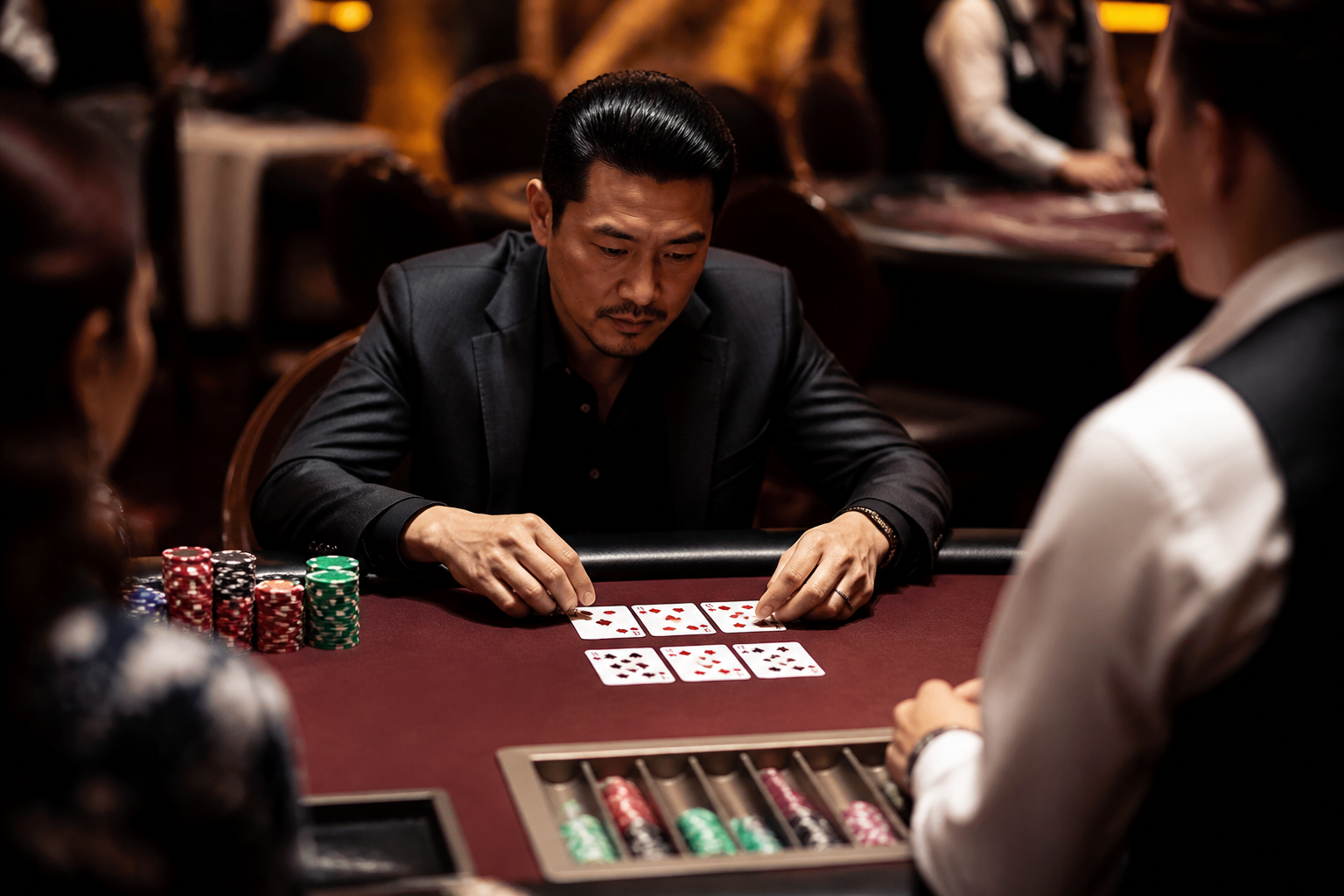
What Makes Pai Gow Poker Unique
Pai Gow Poker stands apart from other casino table games because of its built-in safety net: the push. Unlike blackjack or baccarat, where every hand typically resolves as a win or loss, Pai Gow Poker frequently ends in a tie, meaning your original bet simply returns to you. For players looking to extend their bankroll and reduce variance, understanding how to engineer more pushes isn't just a quirky side goal—it's a legitimate strategic approach that can dramatically change your session experience.
In Pai Gow Poker, each player receives seven cards and must split them into two hands: a five-card "high" hand and a two-card "low" hand. To win the round outright, both your high and low hands must beat the dealer's corresponding hands. If you win one and lose one, the result is a push. This structure means that roughly 40% of all hands in Pai Gow Poker end in a tie, making it one of the most push-friendly games in the casino.
Why Pushing More Often Benefits Your Bankroll
Many players underestimate the value of a high push rate. Since pushes return your wager without any house commission, they effectively function as "free" rounds that don't erode your bankroll. A strategy focused on maximizing pushes reduces the overall volatility of your session, allowing you to play longer, enjoy more hands, and avoid the steep bankroll swings common in other table games.
This doesn't mean you're abandoning the pursuit of wins. Rather, smart hand-splitting techniques can simultaneously protect your low hand while still giving your high hand a fighting chance, naturally increasing the frequency of split results (one win, one loss) that lead to pushes.
Core Strategy: The House Way as a Baseline
Most casinos default players to the "House Way" if they don't want to make their own splitting decisions. This predetermined set of rules is designed to be statistically sound, but it isn't always optimized for maximizing pushes—it's optimized for overall mathematical balance. Learning the House Way gives you a solid foundation, but savvy players deviate from it in specific situations to increase their push frequency.
Key House Way Principles
- Three pairs are typically split so that the strongest pair goes to the low hand (as a pair) and the remaining pair stays with the high hand.
- Two pairs are kept together on the high hand unless both pairs are high-ranking, in which case one pair may move to the low hand.
- A single pair usually stays on the high hand, with the two highest remaining cards forming the low hand.
Advanced Techniques to Increase Push Frequency
To push more consistently, focus on balancing your hands rather than maximizing the strength of one at the expense of the other. Here are specific scenarios where deviation from the House Way can improve your push rate:
Strengthening the Low Hand
Your low hand only needs to beat the dealer's two-card hand, which is a much lower bar than beating a five-card high hand. Prioritizing a stronger low hand—even if it slightly weakens your high hand—often leads to more balanced outcomes. For example, with three pairs, consider placing your highest pair in the low hand position rather than the medium pair, especially against dealers who frequently qualify with modest high hands.
Avoiding Over-Splitting Strong Hands
A common mistake is breaking up a strong five-card hand (like two pair or a straight) to create an artificially strong low hand, inadvertently weakening your high hand below the dealer's typical range. Instead, aim for a low hand with at least a single high card pair (like Jacks or better) when possible, while keeping your high hand intact enough to compete with average dealer hands.
Reading the Dealer's Tendencies
Many casinos use a fixed House Way for the dealer, which is public information. Learning this exact formula allows you to anticipate how the dealer will split their cards and adjust your own strategy accordingly. If you know the dealer's low hand will almost always contain their highest available card, you can calibrate your own low hand to just barely exceed common dealer low-hand combinations, increasing your push likelihood.
The Role of the Joker
Pai Gow Poker uses a 53-card deck that includes a single Joker, which acts as a limited wild card. It can complete a straight, flush, or straight flush, or serve as an Ace. The Joker significantly impacts push strategy because it often allows you to strengthen both your high and low hands simultaneously. When you're dealt the Joker, consider how it can complete a five-card hand just strong enough to likely win or push against the dealer, while freeing up a card for a competitive low hand.
Bankroll Management and Push-Focused Play
A push-heavy strategy naturally extends your playing time, but it's important to pair this with sound bankroll management. Since you're not eliminating losses entirely—just reducing their frequency—set a session budget and decide in advance how many pushes versus losses you're willing to tolerate before walking away. Flat betting (wagering the same amount each hand) works particularly well with push-focused strategies, as it keeps your losses predictable and your bankroll more stable over time.
Commission Considerations
Remember that winning hands in Pai Gow Poker are subject to a 5% commission, which doesn't apply to pushes. This commission structure reinforces why a push-focused strategy can be appealing: you're minimizing the instances where the house takes its cut, while still preserving your capital through ties.
Practice Makes the Difference
Because Pai Gow Poker involves genuine strategic decisions rather than pure luck, practicing hand-splitting scenarios—either through free online versions or low-stakes tables—can sharpen your ability to recognize push-friendly splits quickly. Over time, you'll develop an intuitive sense for which seven-card combinations lend themselves to balanced, push-generating hands versus those better suited for aggressive, win-focused splits.
Ultimately, mastering Pai Gow Poker's push mechanics offers a unique edge: the ability to enjoy extended play, reduced volatility, and a more relaxed casino experience, all while keeping the house's advantage as low as possible.